Bodily fluids & hygiene: How do you keep your care sneakers bacteria-free?
November 3, 2025
In healthcare, hygiene is crucial, and that certainly applies to your care sneakers too. Every day, your shoes come into contact with various potentially harmful bodily fluids and bacteria. That's why it's essential to know how to keep your footwear bacteria-free, so you minimize the transmission of germs and create a safe environment for yourself and your patients.
Why hygiene matters for care sneakers
Healthcare workers walk through hospitals, clinics, and other care facilities all day. This can turn your shoes into a source of bacteria and viruses. Research shows that shoes play a role in the spread of pathogens in healthcare settings. So it's important to take the right measures to keep your care sneakers clean and bacteria-free.

Risks of bacteria on your shoes
Shoes that come into contact with bodily fluids, such as blood, urine, or vomit, can become a breeding ground for bacteria. These bacteria can lead to:
- Infections: Pathogens can spread via your shoes and cause infections in yourself or in patients.
- Bad odor: Bacteria cause unpleasant smells, which is unhygienic and can be unpleasant.
- Spread of disease: Pathogens can be transferred from your shoes to other surfaces, increasing the risk of cross-contamination.
How do you keep your care sneakers bacteria-free?
There are several ways to keep your care sneakers clean and hygienic:
Regular cleaning
Clean your shoes regularly with a mild cleaning agent and water. Remove visible dirt and stains. For stubborn stains, you can use a disinfectant.
Disinfecting
Use disinfectant wipes or a spray suitable for your shoe material. Make sure you treat all surfaces properly, including the soles. Disinfect your shoes at least once a week, or more often if used intensively.
Air drying
After cleaning and disinfecting, let your shoes air dry thoroughly. Damp shoes are an ideal environment for bacterial growth.
Rotate your shoes
If possible, alternate between shoes daily. This gives your shoes the chance to air out and dry, reducing bacterial growth.
Use shoe covers
In certain environments, such as operating rooms, shoe covers are mandatory. These provide an extra barrier between your shoes and the environment, minimizing the spread of bacteria.
Choose the right materials
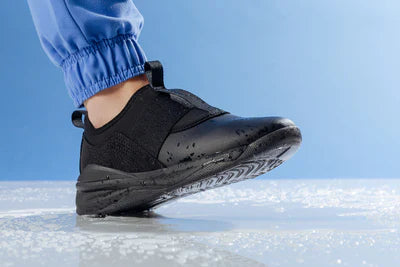
Some materials are easier to clean and disinfect than others. Choose, for example, our care sneakers made from Clarino material, which is fluid-repellent and easy to clean. Avoid porous materials that are hard to clean.
GoClove: hygienic care sneakers
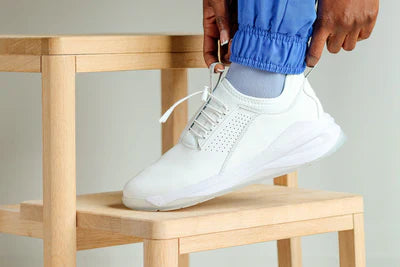
GoClove care sneakers are designed with hygiene and comfort in mind. They're made from fluid-repellent Clarino, a material that's easy to clean. Thanks to the slip-on sock design, they're quick to put on and take off, which is handy when cleaning. The non-slip sole provides extra safety on slippery hospital floors.
Whether you choose the Classic, Forte, Strada, or Alto, with GoClove care sneakers you're assured of hygienic and comfortable footwear that meets the demands of healthcare.
Conclusion
Keeping your care sneakers clean and bacteria-free is essential for hygiene and safety in healthcare. By applying the right cleaning and disinfection methods, you minimize the risks of infections and cross-contamination. Invest in good quality care sneakers, such as those from GoClove, to protect your feet and promote a safe working environment.