Sciatica and healthcare: How your shoes can affect nerve pain
You know the feeling: after a shift of 10, 12, or even more hours on your feet, you feel that dull, nagging pain radiating from your lower back through your buttock and all the way down your leg. This is often a sign of an irritated sciatic nerve, better known as sciatica. For healthcare professionals who spend a large part of their work standing for long periods, this is a common complaint. But the good news is: the solution starts at the foundation of your body: your shoes. Take good care of yourself, so you can take care of others.
The kinetic chain: from foot to back
The sciatic nerve is the longest nerve in your body, running from your lower back all the way to your foot. Nerve pain along this path can therefore be caused by a pinch in the back, but also by an abnormal position of the feet, legs, or pelvis.
Why the right foot support is crucial
Think of your shoes as the foundation of your house. If that foundation isn't stable, the wall above it cracks. In your body, this is the kinetic chain: a chain reaction from your feet to your knees, hips, and ultimately your back. A bad shoe can lead to excessive pronation (the arch collapsing inward) or supination. This disrupts the alignment of your leg, increasing the strain on your spine and pelvis. That extra twisting and turning can irritate the sciatic nerve or increase pressure on the intervertebral discs.

Running shoes: the big myth for standing professions
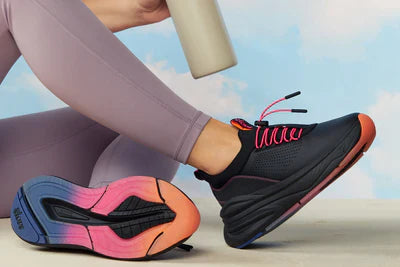
Many healthcare professionals think a running shoe is the ultimate solution, because of its soft, thick sole. This is a common mistake. Running shoes are designed for dynamic strain, the constant impact of running. They are soft and springy.
But if you stand all day (static strain) or walk calmly, this becomes a disadvantage. The overly soft material creates instability. It's like building on quicksand: your feet have to work harder to find balance, leading to energy loss and extra muscle tension in the calves, buttocks, and lower back. This actually increases the pressure on that sensitive sciatic nerve.
The solution: stability and support
The ideal comfortable sneaker for standing professions offers a perfect balance between cushioning and stability. Good healthcare shoes focus on neutralizing your foot position and absorbing shocks without creating instability.
The features of a supportive care shoe that can relieve sciatic nerve pain:
- Targeted support: A pre-shaped footbed that supports the arch and counters overpronation, helping maintain correct alignment from your ankle to your back.
- Motion control: The sole should absorb shocks, while being rigid enough to prevent unnecessary side-to-side movement in the foot and ankle (which can irritate the nerve).
- Optimal fit: A roomy toe box and a cradling fit ensure even weight distribution. The right foundation reduces unnecessary tension in the plantar fascia (the tendon plate under the foot), which indirectly affects your entire leg line.
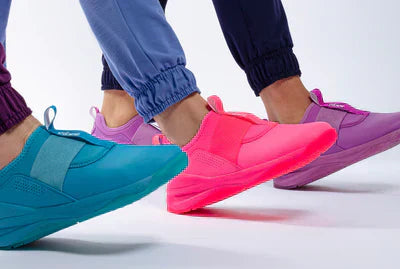
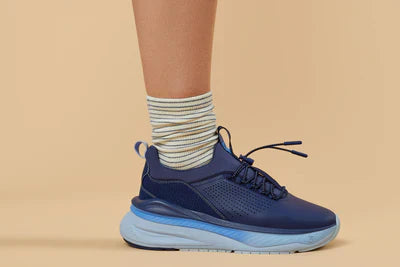
GoClove's focus on stability and maximum shock cushioning, combined with essential healthcare features such as the grippy, non-slip sole and the easy-to-clean Clarino™ upper material, helps optimize the kinetic chain. On top of that, the quick slip-on sock design means you don't have to bend down unnecessarily (which can be painful with sciatica).
Conclusion
Your body is your most valuable tool in healthcare. By investing in care sneakers that offer stability and targeted support, you reduce the chain reaction of improper loading that can lead to sciatica and other pain complaints. Don't choose soft quicksand, choose a solid foundation. Discover the collection of comfortable care sneakers specifically designed to support you powerfully and pain-free through your entire shift.