Sweaty feet in the hospital? The role of good socks and their benefits.
October 28, 2025
You stand for hours, you walk kilometers. Your feet are the foundation of your workday. It's no surprise, then, that many healthcare professionals deal with sweaty feet in the hospital. This is more than just a discomfort; constant moisture can lead to irritation, blisters, and odor. You want to take care of others, but to do that you first need to make sure your own foundation, your feet, stays strong and dry. Good socks play a crucial role here. We explain why, and what the benefit is for your long shifts.
The problem: why your feet sweat so much
Your feet have the highest concentration of sweat glands per square centimeter of your entire body. During a long shift in a warm, sterile environment, combined with continuous movement, this sweat quickly becomes a problem. This excessive sweating is medically known as hyperhidrosis. What makes the healthcare environment so challenging?
- The enclosed nature of professional care sneakers (needed for protection) can trap heat and moisture.
- Stress and continuous activity raise your overall body temperature and sweat production.
- The long, uninterrupted hours give your feet little chance to air out and dry.
Constant moisture doesn't just cause discomfort; it creates the perfect breeding ground for bacteria and fungi. This leads to that unpleasant odor and increases the risk of athlete's foot.
Good socks: the essential buffer
It's a common mistake to invest in quality care sneakers and then wear "regular" cotton socks. Cotton absorbs moisture, but holds onto it, leaving your feet wet all day. The role of good socks is to wick away moisture, this is what we call moisture management.
The right socks do two things at once:
- Moisture management: They wick the sweat away from the skin, to the outer layer of the sock. This allows it to evaporate (or at least not stay against your skin).
- Antimicrobial protection: Materials like merino wool or special synthetic fibers have naturally antibacterial properties. This is the direct answer to the odor and hygiene issues you experience. Good socks reduce the breeding ground for the bacteria that cause odor.

More than moisture: the compression advantage
Many healthcare professionals choose compression stockings. Their benefit goes far beyond moisture management alone. By applying targeted pressure to your lower legs, they improve blood circulation, which is essential after hours of standing and walking. Improved circulation reduces swelling, prevents fatigue, and even helps lower the risk of varicose veins. Your socks are an extension of your medical equipment, just as important as the rest of your clothing.
The link with care sneakers
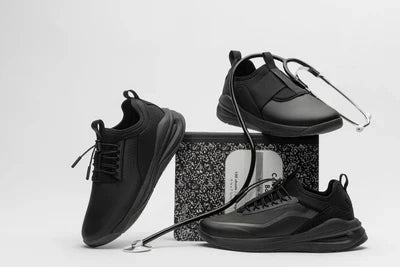
Good socks work optimally together with the right care sneakers. Our care sneakers are designed to promote hygiene and are easy to clean thanks to materials like Clarino™, which is fluid-repellent. But even the most breathable material can't compete with a wet cotton sock. The combination is crucial:
- The Clarino™ material keeps the outside of your care sneakers clean.
- A high-quality, moisture-wicking sock provides the necessary moisture management on the inside.
Make sure to rotate your shoes after a long shift and throw your socks straight in the wash. This gives both your shoes and your feet the chance to fully recover. Take good care of yourself, so you can take care of others.
Conclusion
Sweaty feet are a reality in the hospital, but it's a problem you can solve. By investing in high-quality, moisture-wicking socks and combining them with clean, protective care sneakers, you create a dry, comfortable, and hygienic foundation. This is the invisible boost you need to get through your next shift energetic and odor-free. Check out our collection of compression stockings and care sneakers designed to support your long days.