Heavy legs after a night shift? The effect of heavy shoes on fatigue
October 26, 2025
You know the feeling: the night shift is over. You've stood, walked, and rushed around for ten hours or more. Your feet are burning, your back aches, and your legs feel as heavy as if you'd been wading through thick mud. This exhaustion is more than just a lack of sleep; it's a direct result of the static strain of your job, and the shoes you wear. Take good care of yourself, so you can take care of others. In this guide, we explain how the wrong shoes contribute to those heavy legs and how the right care sneakers make the difference.
The anatomy of tired legs
After a long shift, fatigue in your legs is the result of a complex chain reaction, known as the kinetic chain. Your feet are the foundation, and if that foundation is unstable, your entire body has to work harder to maintain balance.
Static strain explained
In healthcare, you stand still a lot. We call this static strain. Unlike dynamic strain (walking), where your muscles contract and relax to pump blood back to the heart, muscle tension while standing remains constant. This slows blood circulation, causing fluid and blood to pool in your lower legs. This leads to swelling, that heavy feeling, and over the long term, conditions like plantar fasciitis (inflammation of the tendon plate under your foot). Research shows that footwear has a significant impact on discomfort during prolonged standing.
The myth of the soft running shoe
Many healthcare professionals choose soft, springy running shoes out of habit. While that cushioning is fantastic for absorbing the impact of landing while running, it's often bad for prolonged standing. Think of the analogy: your shoes are the foundation of your house. You can't build stably on quicksand (an overly soft, springy sole).
Why soft shoes lead to extra fatigue:
- Instability: An overly soft sole causes unnecessary wobbling. The muscles in your feet and ankles constantly have to make small corrections, leading to rapid muscle fatigue and a feeling of being overworked.
- Energy loss: The energy that goes into the cushioning sole has to be absorbed again by your body with every step or correction. This costs extra energy, increasing overall fatigue and intensifying that heavy-legs feeling.
The solution: stability and support
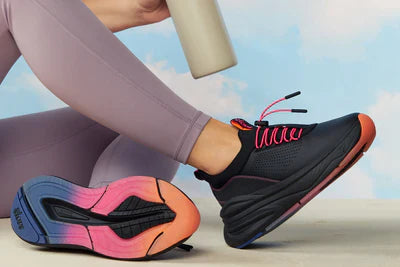
The best care sneakers focus on reducing unwanted movement in the kinetic chain. By offering stability, your muscles have to compensate less, so you tire less quickly and foot pain, such as pain from pronation, is reduced. The right shoe stabilizes the arch and heel, drastically reducing the impact on your knees and hips.
The essential features of high-quality care sneakers:
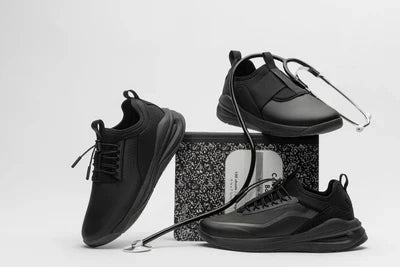
- Grip: The non-slip sole provides excellent traction on slippery hospital floors, ensuring a safe, stable base.
- Maintenance: The Clarino™ material is fluid-repellent and easy to clean, which is essential in a sterile environment.
- Comfort and efficiency: The slip-on sock design means you can get the shoes on and off in a flash, a small detail that makes a big difference at the end of a long shift.

Conclusion
Heavy legs after the night shift aren't an unavoidable fate, but a signal that your body needs better support. By choosing care sneakers focused on stability and reducing static strain, you invest directly in your own stamina and health. Remember: take good care of yourself, so you can take the best possible care of your patients. It starts with the foundation: the shoes on your feet. Check out our collection of comfortable sneakers specially designed to help you through every long shift.